








(qlmbusinessnews.com . Wed 9th Apr, 2025) London, UK —
Recession Fears Grip Markets as Trump Tariffs Bite: Is the UK Economy Heading for a Downturn?
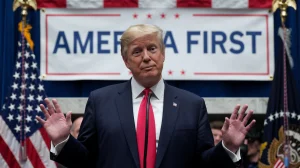
Sharp falls across global stock markets, triggered by former US President Donald Trump's aggressive tariff policies, have intensified speculation about a potential worldwide recession – raising critical questions for the UK economy.
While financial analysts caution that tumbling share prices don't automatically signal an impending economic slump, the scale and breadth of the recent market sell-off suggest a significant reassessment of future corporate profitability is underway. The core concern is straightforward: increased tariffs translate to higher costs for businesses, inevitably squeezing profits.
Experts agree that while a recession isn't guaranteed, the probability has markedly increased following the implementation of some of the most extensive trade tariffs seen in modern history. Officially, an economy enters recession after experiencing two consecutive quarters (three-month periods) of negative growth – a shrinking Gross Domestic Product (GDP).

The UK's economic footing already appears somewhat fragile. Growth was a marginal 0.1% in the final quarter of last year, and preliminary monthly figures indicated a contraction of the same amount in January. The upcoming release of February's economic data this Friday will be closely watched for further signs of weakness, though confirmation of a technical recession remains distant.
However, specific indicators within the market turmoil are causing particular unease. Banking stocks, often viewed as bellwethers for broader economic health, have suffered notable declines. Major international banks like HSBC and Standard Chartered, heavily involved in East-West trade flows, saw their shares drop significantly, although they later recovered some losses. As one seasoned market observer noted, “The thing that made me catch my breath was the fall in the banks.”
Further warning signals emanate from commodity markets. Prices for copper and oil – key indicators of global industrial activity and demand – have both fallen by over 15% since the tariff announcements, suggesting weakening confidence in future economic growth.
Historically, truly synchronised global recessions are infrequent, with the Great Depression of the 1930s, the fallout from the 2008 Great Financial Crisis, and the initial COVID-19 pandemic shock being rare examples. While analysts still deem a downturn on that scale unlikely this time, the risk of recession in major economies like the US, UK, and the European Union has been significantly revised upwards.
For UK Chancellor Rachel Reeves, there might be a sliver of positive news: increased demand for the perceived safety of UK government bonds (gilts) could lower government borrowing costs by an estimated £5bn to £6bn annually. However, this benefit would likely be dwarfed by the negative impact on tax revenues should the wider UK economy contract and slide into recession.
This News Story is brought to you by QLM Business News, your Digital Media Channel
Visit QLM businessnews.com
For more business news stories also follow us on Facebook, X and Youtube.
To Help qlm business news bring you more new stories like this, please like, share and subscribe.
Unlock unparalleled business growth and effortlessly attract a stream of new customers through QLM Business News Sponsored Advertising. Elevate your brand's presence and captivate your target audience with precision. Visit QLMbusinessnews.com and click on “Advertise” to harness the power of strategic advertising. Don't miss this unparalleled opportunity to propel your business to new heights of success!
Disclaimer: All images presented herein are intended solely for illustrative purposes and may not accurately depict the true likeness of the subjects, objects, or individuals referenced in the accompanying news stories.