












(qlmbusinessnews.com Fri, 15th Dec, 2023) London, UK —
“BOJ Policy Shift Sparks Concerns for U.S. Dollar: The Unraveling of Yield Curve Control”
The Bank of Japan (BOJ) has introduced a significant policy change with potential repercussions for every U.S. dollar in American bank accounts. This move revolves around the central bank's adoption of “yield curve control.”
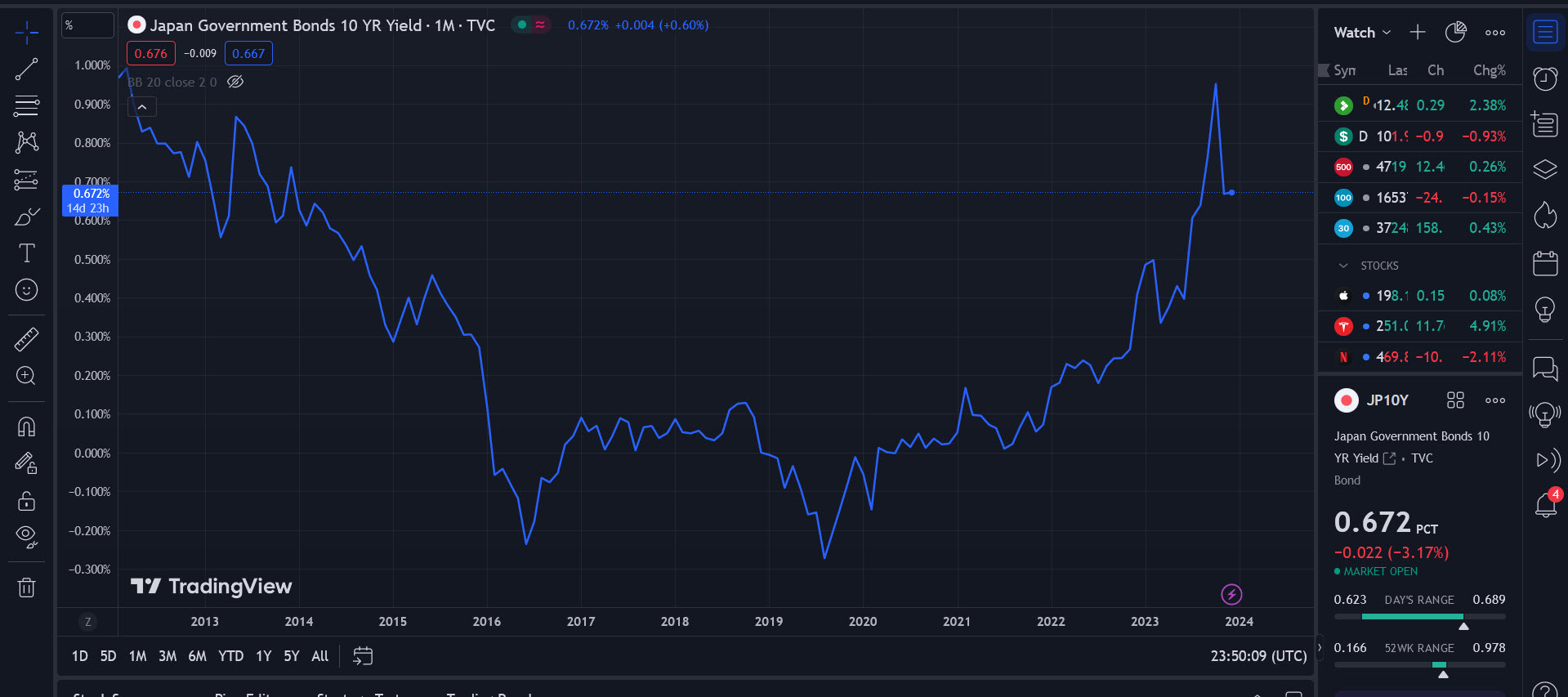
Yield curve control involves a central bank purchasing government bonds to maintain low long-term interest rates, aiming to boost borrowing and stimulate spending. Japan had been implementing this policy since September 2016, setting a record among major global economies. However, this record came to an end on October 30 when the BOJ announced its decision to unwind yield curve control, aligning with the rest of the world.
While the discontinuation of yield curve control is favorable for Japanese markets, allowing citizens to earn higher yields on government bonds, it raises concerns for the U.S. dollar. The shift in Japan's policy has implications for the demand for U.S. government debt.
The Background: Japan's Impact on U.S. Debt
Japanese investors, facing low-yielding government bonds domestically, historically sought higher yields abroad. They borrowed Japanese yen at a low rate, using the funds to invest in higher-yielding foreign government bonds, including U.S. Treasurys. Before the end of yield curve control, Japan became the largest foreign holder of U.S. government debt, amassing $1.33 trillion by the end of 2021.
The Challenge for the U.S. Dollar
With Japan phasing out its yield curve policy, the demand from Japanese investors for U.S. government debt has diminished. From December 2021 to September 2023, Japan's holdings of U.S. government debt dropped by 18%. This shift creates a challenge for the U.S. government, which may struggle to find alternative sources to cover the reduced demand.
Impact on U.S. Treasury Bonds
Foreign investors, including central banks, currently own around 30% of all U.S. government debt, down from 43% a decade ago. This decline in foreign demand coincides with a significant increase in U.S. government debt issuance, posing challenges for the Treasury Department. Recent Treasury auctions have shown signs of weakened demand, with yields exceeding pre-auction trading yields.
Concerns of De-dollarization
The trend of reducing reliance on the U.S. dollar, known as de-dollarization, is becoming evident as global demand for U.S. Treasurys weakens. Some countries, such as the BRICS nations (Brazil, Russia, India, China, and South Africa), are actively seeking alternatives to the dollar as the world's trading currency.
The Future and Inflation Concerns
If the de-dollarization trend continues, there are concerns that the Federal Reserve might resort to increasing the money supply, potentially leading to inflation. Higher inflation could erode the purchasing power of the U.S. dollar. Investors are advised to consider assets that outpace the rate of inflation to protect their wealth. The situation poses challenges for the U.S. economy, requiring careful monitoring of global economic trends and policy shifts.
This News Story is brought to you by QLM Business News, your Digital Media Channel
Visit QLM businessnews.com
For more business news stories also follow us on Facebook, X and Youtube.
To Help qlm business news bring you more new stories like this, please like, share and subscribe.